English
 日本語
日本語 한국어
한국어 Deutsch
Home > News > Industry News > Is a Smart Energy-Efficient Portable Cooling Hand Fan the Ultimate Secret to Instant Heat Relief and Sustainable Summer Comfort?
Content
Smart energy-efficient portable cooling hand fans have quickly become one of the most practical personal comfort devices available, combining compact design, long battery life, and intelligent features that adapt airflow to the user and the environment. Whether tucked into a bag for a summer commute, clipped to a stroller for a child, or kept on a desk to supplement office air conditioning, these small devices deliver targeted, on demand cooling without the energy consumption or bulk of traditional electric fans or air conditioning units. This article explores what smart energy-efficient portable cooling hand fans are, how they work, the technology that makes them intelligent and efficient, and what to consider when choosing one.
The category has evolved considerably from the simple battery powered handheld fans of the past. Modern versions integrate brushless motors, lithium battery management systems, multiple airflow modes, and in some cases smartphone connectivity or automatic temperature sensing, all while remaining small enough to fit in a pocket or handbag. The result is a personal cooling solution that is both genuinely useful in daily life and considerably more sustainable than constantly running larger cooling appliances just to stay comfortable in warm conditions.
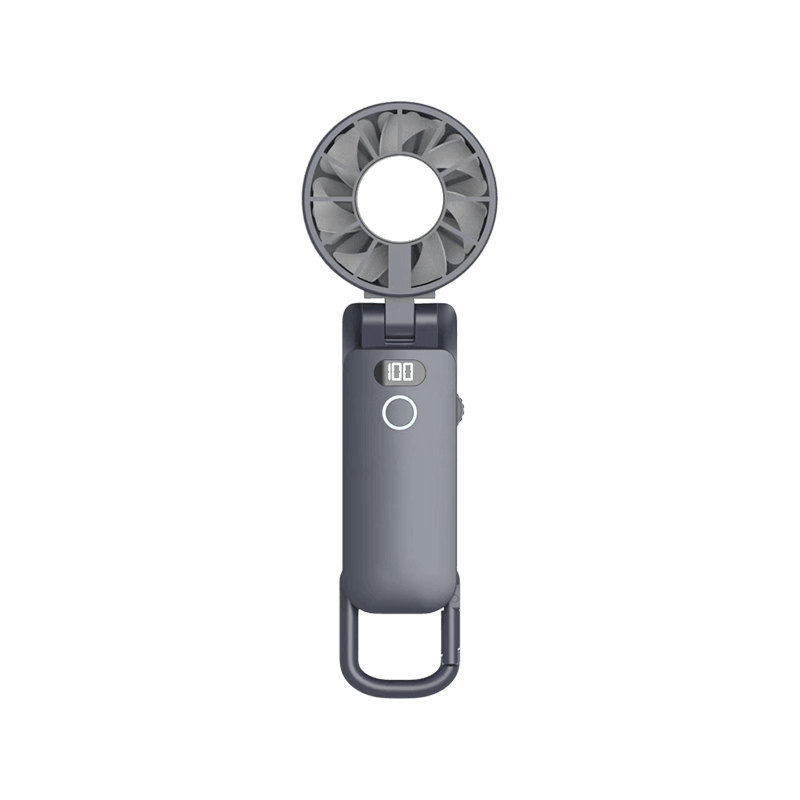
Portable Fan Personal Cooling Energy Efficient Smart Device Rechargeable FanA smart energy-efficient portable cooling hand fan is a small, battery powered personal cooling device designed to be carried, held, worn, or clipped to a nearby surface, providing a direct stream of moving air to cool the user's face or body. The term smart in this context generally refers to one or more intelligent features built into the device, such as multiple automatically adjustable speed settings, temperature or motion sensing, low power standby modes, companion mobile application control, or battery management systems that optimize runtime and protect the battery from damage over repeated charge cycles.
Energy efficiency is achieved through a combination of factors, including the use of brushless direct current motors that convert a higher percentage of electrical energy into airflow rather than wasted heat, efficient blade design that maximizes air movement per unit of power consumed, and intelligent power management software that automatically reduces speed or enters a low power state when full airflow is not required.
Understanding the internal components of a smart energy-efficient portable cooling hand fan helps explain why modern versions perform so much better than older battery powered fans in terms of both airflow quality and energy consumption.
Most modern portable fans use a brushless direct current motor rather than the older brushed motor design found in inexpensive fans of the past. Brushless motors eliminate the physical brush contacts that generate friction and heat in traditional motors, resulting in higher energy conversion efficiency, quieter operation, and a significantly longer operational lifespan since there are no brushes to wear out over time.
The rechargeable power source in most smart portable fans is a lithium ion or lithium polymer battery, chosen for its high energy density relative to size and weight. A battery management system, often integrated into a small circuit board within the fan housing, monitors charging current, cell temperature, and voltage to protect the battery from overcharging, overheating, or deep discharge, all of which can shorten battery lifespan or, in poorly designed products, create safety hazards.
Blade shape and pitch have a significant effect on how much air a fan can move for a given amount of power. Many premium portable fans use blades engineered with computational fluid dynamics modeling to maximize airflow volume and directional focus while minimizing turbulence and the associated wasted energy and noise that turbulence creates.
Smart fans typically offer several distinct speed settings, allowing the user to select a gentle breeze for extended comfort with maximum battery life, or a stronger burst of airflow for quick cooling when needed, with power consumption scaling accordingly at each setting.
The smart designation in smart energy-efficient portable cooling hand fans generally refers to a set of intelligent features that go beyond a simple on and off switch with a manual speed dial.
Some advanced models include a small temperature sensor that monitors ambient conditions and automatically adjusts fan speed to maintain a comfortable airflow level without requiring the user to manually change settings as conditions warm up or cool down throughout the day.
Many modern portable fans replace traditional mechanical buttons with touch sensitive controls or, in some higher end models, basic gesture recognition that allows the user to adjust speed with a simple hand motion near the device rather than needing to physically press a button.
Certain smart fan models connect to a smartphone application via a short range wireless connection, allowing users to monitor remaining battery life, set custom fan schedules, or select specialized airflow patterns from their phone rather than the device itself.
Intelligent power management software can automatically reduce fan speed during periods of inactivity, enter a low power standby mode when the fan detects it has not been moved or adjusted for an extended period, and provide accurate battery percentage readouts so users can plan recharging around their day rather than being caught off guard by a sudden shutdown.
A fan that automatically matches its airflow output to actual conditions and user activity avoids the common problem of running at maximum power unnecessarily, which directly extends battery runtime between charges and reduces the overall number of charging cycles the battery experiences over its service life.
One of the most compelling reasons for the growing popularity of smart energy-efficient portable cooling hand fans is the dramatic difference in energy consumption compared to conventional cooling appliances, particularly air conditioning systems.
| Cooling Method | Typical Power Draw | Cooling Scope | Portability |
|---|---|---|---|
| Central Air Conditioning | Several thousand watts | Entire room or building | None |
| Standard Household Fan | Thirty to seventy watts | Single room | Limited, requires wall outlet |
| Desktop USB Fan | Two to five watts | Immediate personal area | Moderate, requires nearby power source |
| Smart Portable Hand Fan | One to three watts | Direct personal airflow | Full, battery powered and pocket sized |
Because portable hand fans cool the individual directly rather than attempting to lower the temperature of an entire room, they achieve a comfortable personal cooling effect using a small fraction of the energy required by whole room cooling systems, making them a genuinely sustainable option for personal comfort in many everyday situations, particularly outdoors or in spaces where air conditioning is unavailable or impractical.
Battery performance is one of the most important practical considerations for portable fan users, and smart energy-efficient models typically offer meaningfully longer runtimes than older designs through a combination of hardware and software improvements.
Many current models support fast charging through a USB-C connection, allowing the internal battery to reach a significant portion of full capacity within thirty to sixty minutes, a substantial improvement over older micro USB charging standards that could take several hours for a complete charge.
Quality lithium battery cells combined with intelligent charge management can typically sustain several hundred full charge cycles before experiencing a noticeable decline in maximum capacity, meaning a well made smart portable fan can often remain useful for multiple years of regular seasonal use before battery replacement or product replacement becomes necessary.
The materials used in the construction of a portable cooling fan affect not only its durability and safety but also its overall energy efficiency and user comfort.
Most portable fan housings are constructed from lightweight, impact resistant plastic such as polycarbonate or ABS, chosen for its combination of low weight, durability, and resistance to the minor drops and bumps typical of daily carrying and handling. Some premium models incorporate soft touch coatings or textured grips to improve handling comfort and reduce the likelihood of the device slipping from the user's hand.
Because these fans are frequently used near the face and are often handled by children, safety grilles with narrow spacing are a standard and important design feature, preventing fingers from contacting the moving blades while still allowing sufficient airflow through the housing. Some manufacturers use soft, flexible blade materials specifically to reduce injury risk in the event of accidental contact.
Many portable fans intended for outdoor use incorporate a degree of water and dust resistance, rated according to standardized ingress protection classifications, allowing the device to withstand light rain, sweat, or dusty conditions without damage to internal electronics.
Smart energy-efficient portable cooling hand fans serve a wide range of practical purposes across different lifestyles and settings.
Commuters walking, cycling, or waiting on crowded public transportation platforms often rely on portable fans to stay comfortable during warm weather when air conditioning is unavailable or insufficient, particularly during transitions between air conditioned indoor spaces and hot outdoor environments.
Attendees at outdoor concerts, sporting events, festivals, and theme parks frequently use portable fans to manage heat during long periods spent outdoors, often combining a handheld or neck fan with sun protection measures for extended comfort.
Desktop and clip-on portable fans provide a convenient way to supplement inadequate air conditioning in shared office spaces, home offices, or bedrooms without disturbing others nearby, since the airflow is directed specifically at the individual user rather than the entire room.
Clip-on fans attached to strollers, car seats, or high chairs help keep infants and young children comfortable during outdoor outings, while the low power draw and safety focused design of quality smart fans make them a practical choice for this sensitive use case.
Runners, cyclists, and gym goers use compact portable fans to cool down quickly during breaks in physical activity, appreciating the lightweight, easily carried form factor that does not interfere with movement.
Portable fans are commonly used by individuals managing hot flashes associated with menopause or other medical conditions that cause sudden episodes of overheating, valued for their discretion and immediate availability whenever needed throughout the day.
With a wide range of products available, evaluating the following features can help buyers select a smart energy-efficient portable cooling hand fan that best fits their needs.
| Feature | Why It Matters |
|---|---|
| Battery capacity and runtime | Determines how long the fan can be used between charges at each speed setting, important for full day outings. |
| Motor type | Brushless motors generally offer better efficiency, quieter operation, and longer service life than brushed alternatives. |
| Noise level | Lower noise output is important for office, classroom, or shared living space use. |
| Number of speed settings | More granular speed control allows better matching of airflow to actual comfort needs and conserves battery life. |
| Form factor | Handheld, neck worn, clip-on, and desktop designs each suit different activities and use patterns. |
| Charging port standard | USB-C charging offers faster charge times and broader cable compatibility than older micro USB standards. |
| Safety certifications | Look for relevant electrical safety certifications, particularly important for products intended for use around children. |
| Weight and size | Lighter, more compact designs are generally more convenient for daily carrying and extended handheld use. |
Proper care extends the lifespan of a smart portable cooling fan and helps maintain both airflow performance and battery health over time.
While generally low risk devices, a few safety considerations are worth keeping in mind when purchasing and using portable cooling fans.
Beyond their low power consumption during use, several additional factors influence the overall environmental footprint of smart energy-efficient portable cooling hand fans.
Unlike older disposable battery powered fans, virtually all current smart portable fans use rechargeable lithium batteries, substantially reducing the volume of single use battery waste generated over the product's lifespan compared to fans requiring frequent disposable battery replacement.
Products designed with replaceable batteries, modular components, and readily available spare parts tend to have a lower overall environmental impact than fully sealed disposable designs, since a longer usable product life reduces the frequency of replacement purchases and the associated manufacturing and shipping emissions.
By providing effective personal cooling using a small fraction of the energy required by room scale air conditioning, portable fans can meaningfully reduce overall household or personal energy consumption during warm weather when used as a supplement to, or occasional substitute for, larger cooling systems.
The smart portable fan category continues to evolve as manufacturers integrate new technology and respond to consumer demand for even greater convenience and efficiency.
Future models are likely to incorporate more sophisticated environmental sensors capable of detecting not only ambient temperature but also humidity levels, automatically adjusting airflow characteristics to optimize perceived cooling effect under varying weather conditions.
Some manufacturers are experimenting with small integrated solar charging panels that supplement battery charging during outdoor daytime use, extending effective runtime for users spending extended periods outside without access to a conventional charging outlet.
Ongoing refinement of blade geometry and motor design continues to reduce operational noise levels, an area of particular focus for manufacturers targeting office, classroom, and shared living environments where quiet operation is highly valued.
Some smart fan designs are beginning to incorporate additional wellness features, such as gentle aromatherapy diffusion or integration with fitness tracking applications that can trigger increased airflow automatically during detected physical activity.
Smart energy-efficient portable cooling hand fans represent a practical, genuinely sustainable solution to personal comfort during warm weather, combining the direct cooling effect of targeted airflow with intelligent features and efficient power management that maximize battery life and minimize energy waste. By using far less power than room scale cooling systems while still delivering meaningful comfort exactly where and when it is needed, these compact devices offer a compelling alternative or supplement to traditional cooling methods for commuting, outdoor activities, office use, and everyday personal comfort. As sensor technology, battery efficiency, and motor design continue to advance, the next generation of smart portable fans is likely to offer even longer runtimes, quieter operation, and more responsive intelligent features, further cementing their place as an essential personal comfort accessory.
For anyone considering a purchase, focusing on battery capacity, motor quality, noise level, and safety certification will help ensure the selected smart energy-efficient portable cooling hand fan delivers reliable, comfortable performance across the full range of situations where personal cooling matters most.
Falling asleep quickly and staying asleep through the night depend on more than just a dark, quiet room. Body temperature plays a central, often underappreciated role in the sleep...
READ MOREAs households increasingly seek ways to stay comfortable while managing energy costs, the Energy-Efficient Smart Heated Throw Blanket has emerged as a practical solution that blen...
READ MOREChoosing the Right Handheld Cooling Fan: Quick Answer The best handheld cooling fan for most people is a rechargeable, dual-blade or bladeless model with at least 3 speed settings...
READ MORECleaning has traditionally been one of the most time consuming and physically demanding tasks in both household and commercial settings. Whether it involves scrubbing floors, vacu...
READ MOREUnderstanding Portable Cooling Fans and Their Applications Across Different Environments Portable cooling fans represent efficient, lightweight personal cooling solutions providin...
READ MOREThe first time you wash a heated blanket, the process feels slightly risky. You are placing a product filled with wires into water, and a mistake can shorten its lifespan or damag...
READ MORE