Low-Temperature Burn Prevention Architecture in Compact Floor Heating Systems
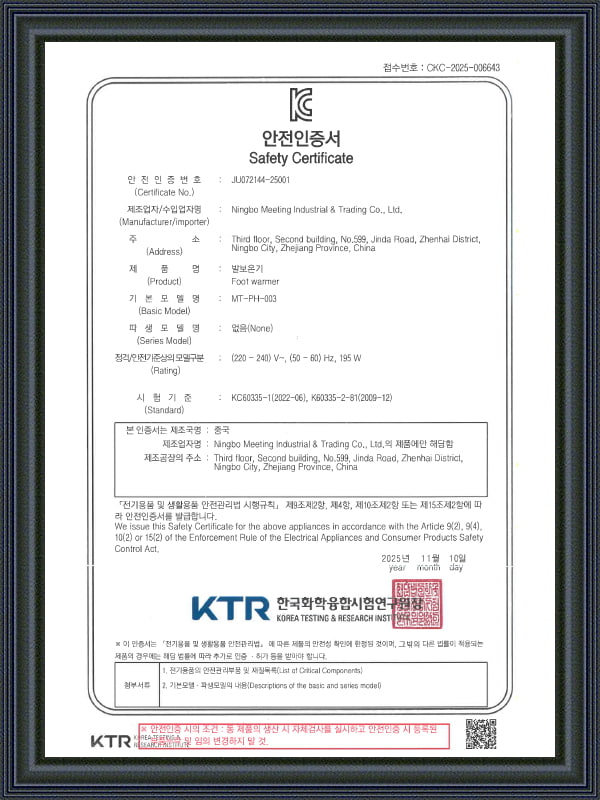
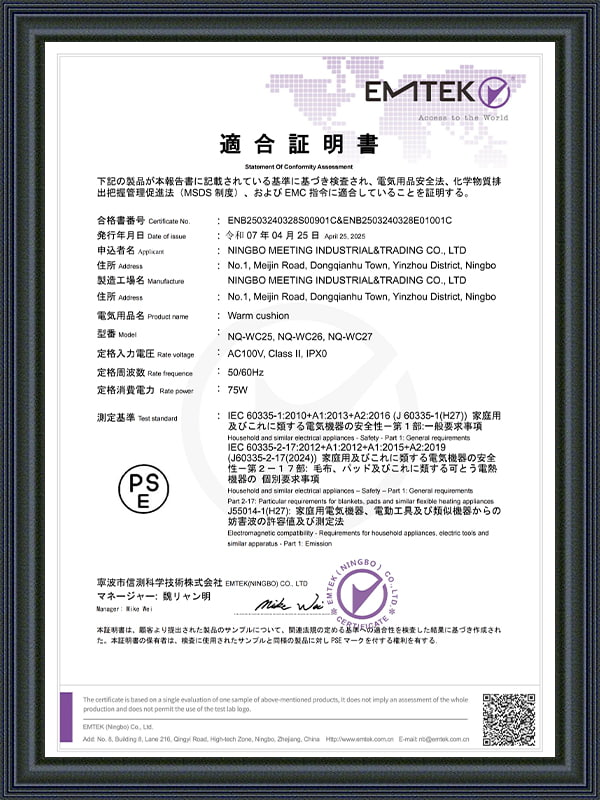
Low-temperature burns represent a specific physiological hazard in the household heating appliance sector. Unlike standard thermal burns caused by brief contact with high-temperature surfaces, low-temperature burns occur when skin remains in prolonged, continuous contact with a relatively mild heat source—typically between 44 and 50 degrees Celsius—over several hours. Because the heat feels comfortable initially, the user's natural defense mechanisms are not triggered, allowing thermal energy to slowly penetrate into deeper skin layers. In the development of personal heating appliances, integrated manufacturers such as Ningbo Meeting Industrial&Trading Co., Ltd prioritize specific engineering safety parameters to counteract this precise hazard. By combining hardware-level constraints, smart microcontrollers, and material diffusion layers, a compact heated floor mat can deliver functional localized warmth while maintaining a strict barrier against prolonged thermal injury.
Thermodynamic Diffusion Layers and Soft Substrate Engineering
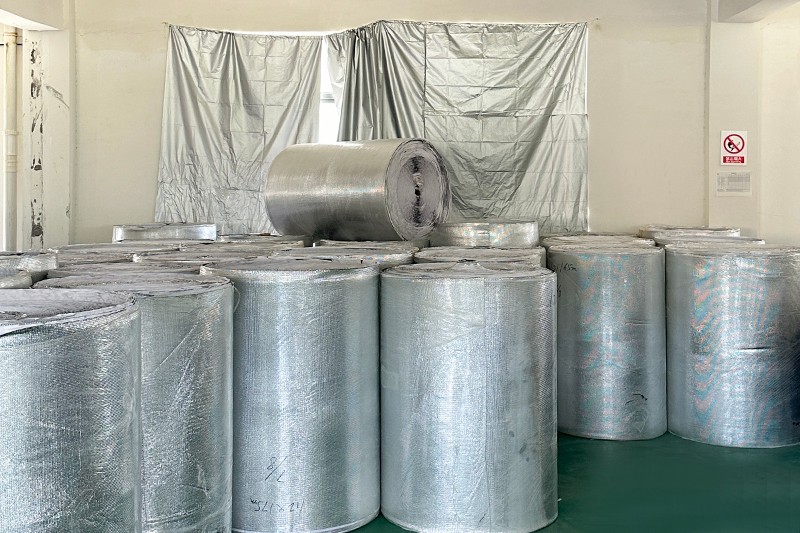
The primary structural defense against localized heat concentration is the integration of multi-layered material substrates designed to scatter thermal energy across the surface area of the mat. Compact heating units often face localized pressure points, such as when a user rests their bare feet or palms on a single spot for extended intervals. To prevent these pressure zones from turning into hot spots, the heating element is encapsulated beneath a specialized aluminum foil thermal diffusion sheet and a high-density flame-retardant foam layer. These combined materials act as a mechanical buffer and a thermal heat sink, flattening the thermal gradient across the fabric cover. This structural layout ensures that energy is distributed uniformly rather than radiating intensely from the underlying wire tracks, mitigating the core cause of localized epidermal tissue damage.
Microprocessor-Driven Smart Timing and Auto-Decay Protocols
Because low-temperature injuries are a direct function of time combined with constant temperature, managing the duration of heat exposure is an essential safety control mechanism. The digital control module of a compact heated floor mat is configured with firmware that enforces automatic shutdown boundaries and temperature decay steps. For example, if the user selects the highest operating temperature setting, the internal microprocessor initiates an automatic step-down sequence after a fixed operational window, such as sixty minutes, lowering the heat to a lower maintenance setting. Additionally, absolute auto-off timers are integrated into the primary logic board, terminating all electrical current to the mat after a predefined cycle to protect individuals who may fall asleep while in direct contact with the appliance.
Dual-Core Heat Sensing Arrays and Micro-Controller Interfacing
Accurate real-time monitoring of the heating elements is critical to preventing the thermal drift that can occur as ambient room temperatures change. The technical layouts engineered by Ningbo Meeting Industrial&Trading Co., Ltd utilize dual-core sensor designs that place high-precision NTC (Negative Temperature Coefficient) thermistor lines alongside the primary heating elements. These sensors maintain a continuous feedback loop with the centralized microcontroller, reading temperature fluctuations at millisecond intervals. If the internal temperature rises even one degree above the designated threshold due to external blankets or localized body insulation, the microcontroller immediately scales back the duty cycle of the power supply via pulse-width modulation, clamping the surface temperature within a defined zone.
Comparative Matrix of Prevention Mechanisms and Physiological Limits
To safely manage human tissue contact over extended durations, product engineering must align physical machine characteristics with established physiological thresholds. The table below outlines how specific integrated features address various exposure scenarios.
| Exposure Variable |
Physiological Hazard Limit |
Integrated Machine Safeguard |
Functional Operational Mode |
| Sustained Contact Time |
Epidermal cellular damage begins after 4 to 6 hours at 44°C |
Automated countdown timers and absolute power shutoff |
Firmware-enforced circuit interruption |
| Localized Thermal Peaks |
Hot spots exceeding 50°C cause accelerated deep tissue burns |
Aluminum foil diffusion sheets and internal padding layers |
Passive thermodynamic heat scattering |
| System Thermal Drift |
Ambient fluctuations can drive unregulated elements past safe limits |
Dual-core NTC thermistor feedback loop with microprocessor |
Active continuous voltage regulation |
| Insulation Trapping |
Covering elements doubles localized heat generation rates |
Positive Temperature Coefficient (PTC) self-limiting wires |
Material-level autonomous resistance throttling |
Material-Level Self-Limiting Alloy Wire Implementations
Beyond electronic control loops, which are vulnerable to external power surges or component component failures, the baseline material selection of the heating wire itself provides an autonomous safety barrier. Utilizing Positive Temperature Coefficient (PTC) alloy composites ensures that the wire possesses a non-linear relationship between temperature and electrical resistance. As the wire approaches its pre-calculated thermal ceiling, the physical structure of the alloy expands, causing a sharp, exponential spike in electrical resistance. This change blocks the flow of incoming electrical current at the structural level, meaning the compact heated floor mat cannot physically exceed its maximum designed temperature capacity, establishing an inherent physical safeguard against low-temperature tissue injury even during electronic system failure.
Ergonomic Structural Flexibility and Enclosure Protection
Mechanical fatigue of internal conductors can create areas of high electrical resistance, which can lead to high localized thermal peaks that cause swift low-temperature burns. To maintain consistency, the inner heating elements are wound around high-tensile structural cores and encased within flexible silicone jackets that absorb physical bending and folding stresses. The power connection housing where the cord enters the mat is similarly reinforced to prevent internal conductor fraying. This attention to structural adaptability ensures that the heating matrix remains flat and unbroken throughout its lifecycle, preserving the engineered safety pathways and maintaining predictable, uniform surface temperatures during daily use.
FAQ
Q: How does the compact design of this floor mat enhance its market adaptability for diverse household environments?
A: The compact dimensions are engineered to provide localized warmth in specific zones, such as underneath office desks, beside beds, or in small reading areas. This physical footprint allows global distributors to target urban apartments and professional workspaces where space optimization and personal energy-efficient heating appliances are highly valued.
Q: What design steps are taken to ensure the power connection hub on a compact heated floor mat doesn't become a mechanical stress point over time?
A: Our focus on practicality and product longevity means the junction box where the power cable interfaces with the mat is constructed with reinforced strain-relief molded jackets. This assembly distributes pulling and twisting forces away from the internal heating grid, preventing wire fraying and localized heat spikes even when the mat is shifted frequently.
Q: How does the control interface prevent the mat from drawing excessive electricity when ambient room temperatures rise?
A: The smart power module features integrated ambient temperature sensing logic. When the surrounding room warms up, the internal controller automatically dampens the duty cycle of the heating element via pulse-width modulation, reducing the electrical consumption while maintaining a steady, comfortable surface temperature.
Q: Can the outer fabric cover of the compact heated floor mat be easily cleaned without compromising the safety of the interior electronics?
A: Yes, keeping household practicality in mind, the exterior utilizes a stain-resistant and fluid-impermeable material layer combined with ultrasonic structural sealing. This prevents dirt accumulation from penetrating into the core electrical matrix, allowing users to wipe down the surface safely with a damp cloth during routine maintenance.
Q: What specific material choices prevent the compact heated mat from slipping on slick hardwood or tile flooring?
A: The underside of the mat features a specialized high-friction, non-slip backing material integrated during the primary layering process. This architectural layer provides strong structural stability on various polished floor surfaces, ensuring the compact mat remains securely in position during use to prevent tripping hazards.
Q: How does the internal engineering prevent the compact mat from remaining powered on indefinitely if a user forgets to turn it off?
A: To maintain strict home appliance safety compliance, the control system includes an un-bypassable hardware auto-off countdown timer. Once the mat completes its pre-programmed operational cycle, the circuit board breaks the electrical connection automatically, preventing unnecessary energy draw and protecting the surrounding environment from unmonitored thermal accumulation.


 English
 日本語
日本語 한국어
한국어 Deutsch