English
 日本語
日本語 한국어
한국어 Deutsch
Home > News > Industry News > Electric Blanket Which Side Up? The Correct Placement Guide for Safe, Even Heat
Content
You unbox your new electric blanket, spread it on the bed, and then stop. Which side goes up? It is one of the most common questions for first-time users, and for good reason. The answer directly affects heating performance, safety, and how long the blanket lasts. In short: the side with the label and controller cord connection is almost always the bottom or the side that faces down toward the mattress. The side that faces up is usually the softer, finished side you feel when you climb into bed. But that is only the beginning. The right placement depends on whether you are using an underblanket or an overblanket, how your bed is layered, and what the manufacturer has built into the design.
Electric blankets are not symmetrical in function even when they look similar on both sides. The heating elements, wiring, and temperature sensors are positioned to deliver heat in a specific direction. When the blanket is placed the wrong way, the heat may be absorbed by the mattress instead of reaching your body. That makes the blanket less efficient, increases your energy use, and can leave you feeling cold despite the blanket running at full power.
Orientation also affects the controller connection. The cord and controller are designed to sit at a specific end, usually near the top or bottom of the bed depending on the model. Common sense placement matters too. A folded wire or a sharply bent cord creates a weak point that may fail over time. Getting the orientation right on the first try prevents unnecessary wear on the wiring and keeps the controller within easy reach.
Finally, manufacturers print care instructions, safety warnings, and certification marks on a fabric label. That label is intentionally positioned on the side that faces down. If you can read the label without lifting the blanket, you have likely placed the blanket upside down.
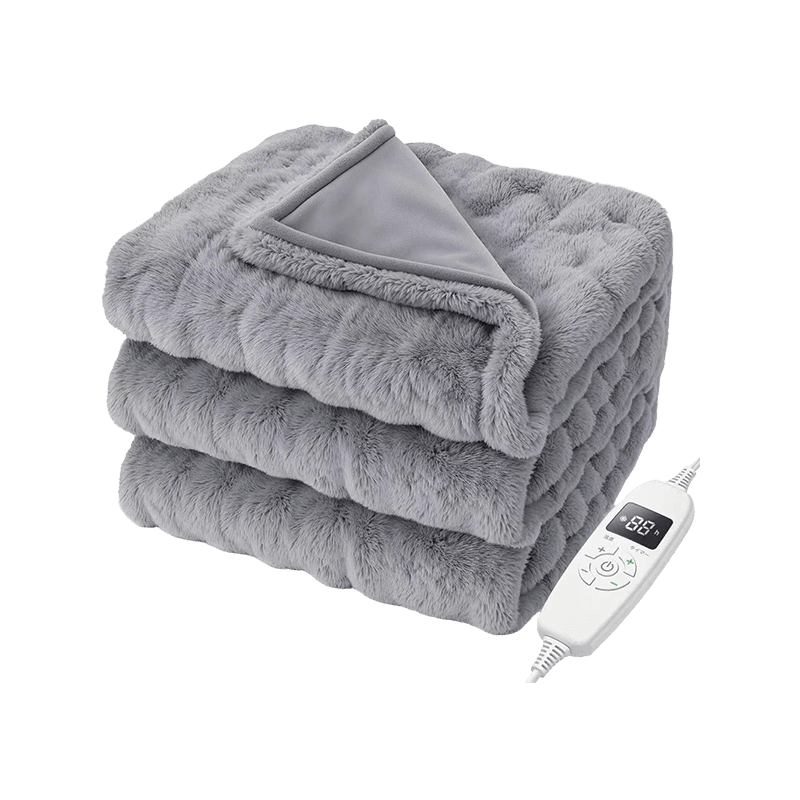
Most electric blankets have two clearly different faces. The side designed to face up is typically the softer, fluffier, or more textured side. This is the side that contacts your body through the sheet or directly if you are using the blanket as a throw. The reverse side is often smoother, more utilitarian in feel, and carries the seams, wiring channels, and labels.
For an underblanket, which is the most common type of electric blanket used on a bed, the positioning logic is straightforward. The blanket lies on top of the mattress, and the heat should travel upward through the fitted sheet to you. That means the warmer side faces up, and the side with the label faces down toward the mattress. The cord should be positioned toward the foot of the bed so it does not interfere with your pillow or your shoulders while you sleep.
For an overblanket, which sits above you like a regular blanket, the principle is reversed in practice but identical in logic. The heat should be pushed downward toward your body. The softer side that touches you faces down, while the outer decorative side faces up. Check the product manual for the specific model, because some overblankets have heating elements arranged differently from underblankets.
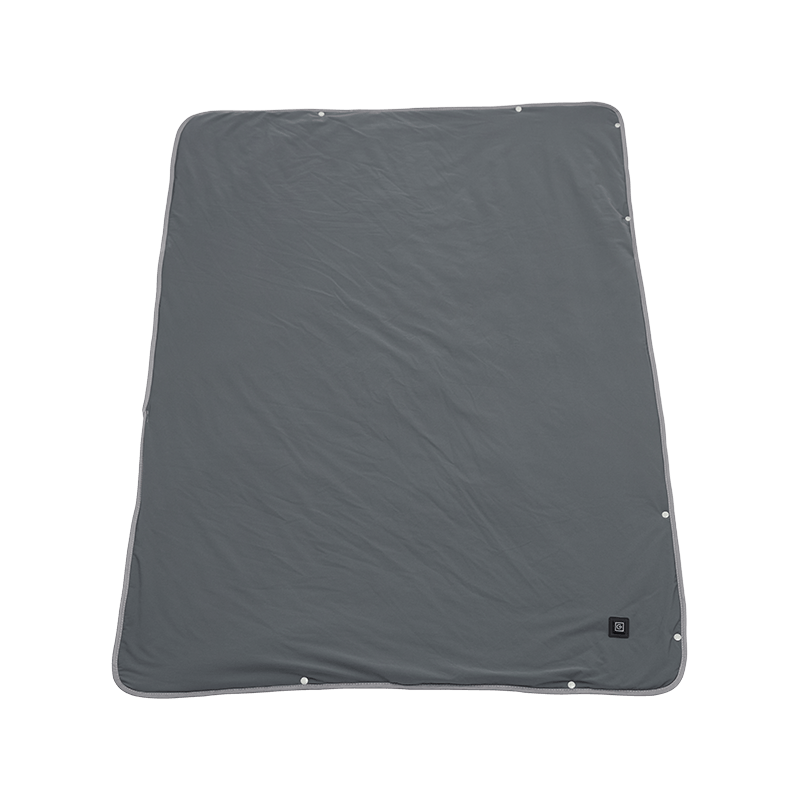
Some blankets only have a small label sewn into a corner or along the edge. If you cannot tell the sides apart by feel, look for the controller connection point. The plug and controller usually exit from the side that faces down in an underblanket configuration. Also check for ties, loops, or elastic straps. These are almost always mounted on the bottom side and are designed to secure the blanket to the mattress. If the straps are on top, the blanket is upside down.
How you layer the bed determines both comfort and efficiency. The most common setup is an underblanket placed directly on the mattress, followed by a fitted sheet, then you, and then your regular duvet or top blanket. This setup keeps the underblanket clean, prevents it from shifting, and lets heat rise through the sheet evenly.
If you use a mattress protector, you need to think about order carefully. Most manufacturers recommend placing the electric blanket above the mattress protector and below the fitted sheet. If the blanket is under the mattress protector, the extra layer may block heat and make the blanket work harder. Some manufacturers specifically state that their blanket should not be used with a memory foam mattress topper, because the trapped heat can damage the foam. Always follow the guidance that comes with your specific product.
A correctly layered bed looks like this from top to bottom:
You can physically use an electric blanket upside down, and it may still produce heat. But it will not perform as intended. The heat output will be less effective because the insulation and fabric layers are working against the heating direction. You may also cause long-term damage. Folding or bunching the wiring, putting strain on the controller connection, and exposing the label side to constant friction from your body can shorten the lifespan of the blanket.
There is also a safety aspect. Electric blankets are tested for heating distribution and temperature control based on their intended side. If the sensors are positioned on the bottom side and the blanket is used in reverse, the sensors may not accurately measure the temperature against your body. That can lead to overheating in some areas or inconsistent heating across the surface. For those reasons, the correct orientation is not just a comfort preference; it is part of safe operation.
Before you put the blanket on the bed, lay it flat on the floor or on the mattress and let it relax for a few minutes. This removes creases and lets the wiring settle into its natural position.
Avoid trapping the electric blanket between the mattress and a heavy mattress topper. That reduces heat transfer and may cause the blanket to overheat because it cannot dissipate heat properly. Similarly, do not place heavy objects on top of the blanket while it is in use.
Modern electric blankets use distributed sensors to maintain an even temperature across the surface. When the blanket is correctly oriented, the sensors are on the side closest to the mattress or layer that needs to be held at a stable temperature. That allows the controller to cycle the power accurately and keep the bed at a consistent warmth.
When the blanket is upside down, the sensor readings are offset. The side touching your body may feel cooler than the controller setting, or the blanket may cycle on and off more often than necessary. Over time, this increases wear on the controller components. In a multifunctional smart electric blanket, the control system is designed to respond to the temperature at the user interface side, so reversing the blanket makes the control logic less effective.
Beyond choosing the wrong side, there are several placement errors that people frequently make. Knowing what they are will save you from replacing the blanket sooner than needed.
Yes. There is a meaningful difference between an underblanket and an overblanket. An underblanket, which is the type you place on the mattress, should have the softer side facing up because the heat rises toward your body. An overblanket or heated throw, which lies on top of you, often has the heating element and wiring positioned differently. The side that contacts your body should be the one that faces down in an overblanket.
For someone shopping for a new blanket, the distinction between underblanket and overblanket is important. If you buy an underblanket and use it as an overblanket, the product will not heat correctly and may feel stiff. If you are looking for a flexible option that can work both on the bed and on a couch, a heated throw may be a better choice. A dedicated underblanket is generally the better option for bed use because it secures to the mattress and distributes heat across the full sleeping surface.
For example, the multifunctional smart electric blanket from this manufacturer is designed as a bed underblanket with multiple heat settings, making it a practical choice for users who want consistent overnight warmth. For those who plan to use a heated blanket outdoors or in a living room, the wear-resistant outdoor heated blanket is built with a tougher outer layer for camping or outdoor seating. These two products require different orientation logic, so always check whether the product is labeled as an underblanket or an overblanket before you set it up.
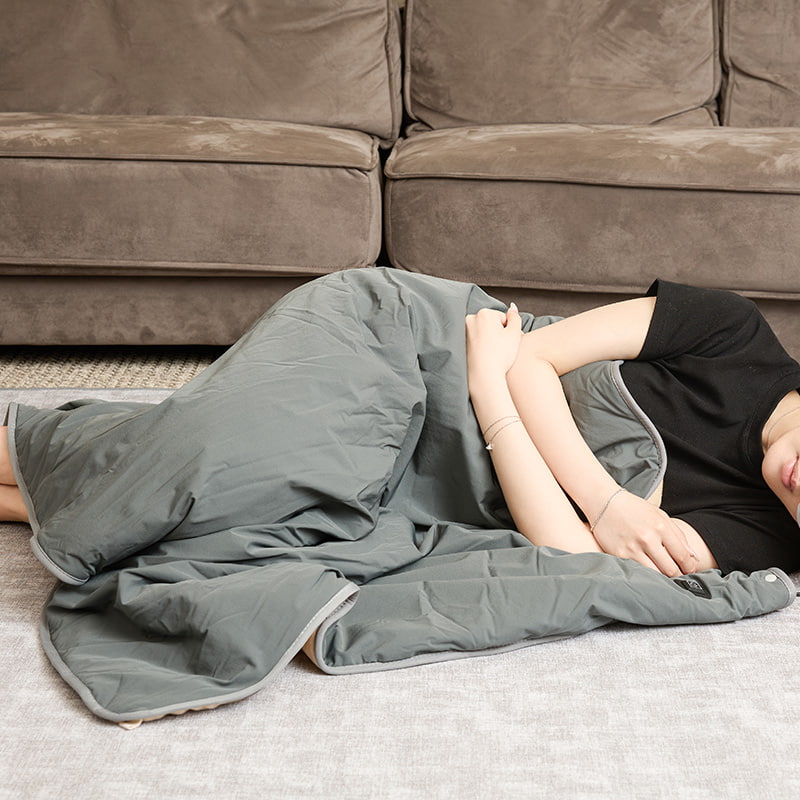 Custom Wear-resistant Outdoor Heated Blankets Suppliers, FactoryNingbo Meeting Industrial&Trading Co., Ltd is China custom Wear-resistant Outdoor Heated Blankets suppliers and factory. Portable Warmth,...View Product →
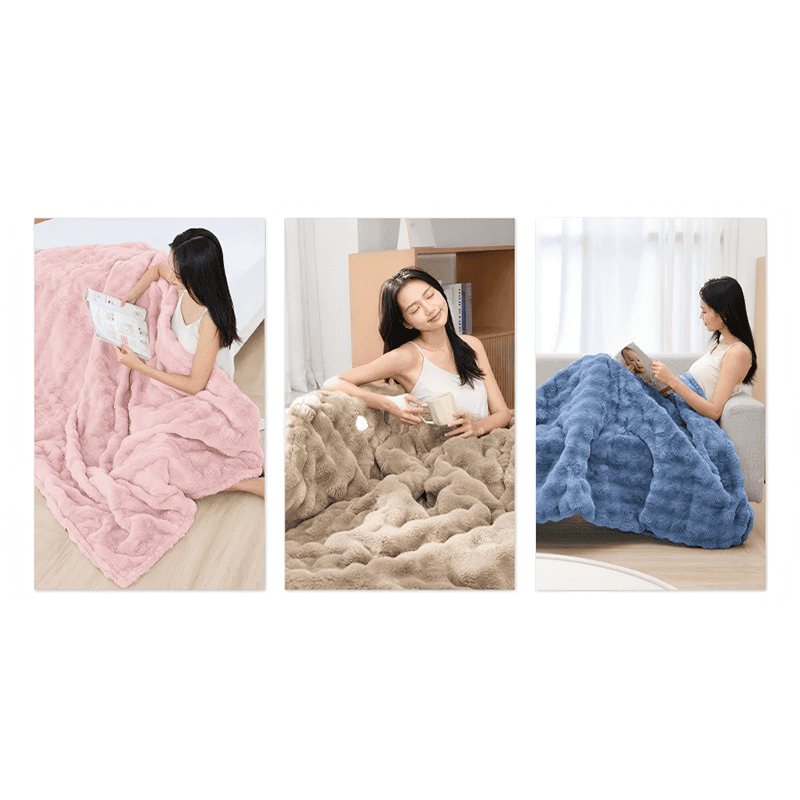 Custom Multifunctional Smart Electric Blanket Suppliers, FactoryNingbo Meeting Industrial&Trading Co., Ltd is China custom Multifunctional Smart Electric Blanket suppliers and factory. Soft, Smart &...View Product →
Washing an electric blanket requires the same correct-side awareness as installation. The label side contains the care instructions and often the certification mark. If you wash the blanket with the label side facing the drum of the washing machine, the label can catch on the drum ridges and cause the edge of the blanket to stretch or tear.
Before washing, disconnect the controller and power cord completely. Check the care label for washing temperature. Most electric blankets should be washed in cold or warm water on a gentle cycle and should not be machine dried. Let the blanket air dry flat on a clean surface so the internal wiring maintains its original layout. Never use clips or clothespins to hang the blanket up to dry; the weight of the water can pull the wiring out of alignment.
You do not need to inspect every wire before every use, but a quick visual check takes less than a minute. Lay the blanket flat and look for any signs of damage on the fabric surface. Check the controller cord for cracks or exposed wire. Confirm that the connector fits firmly into the blanket socket. If the blanket has a burnt smell when you turn it on, unplug it immediately and do not use it again.
Also pay attention to the age of the blanket. Many manufacturers recommend replacing an electric blanket after 10 years of regular use, and some insurance organizations suggest replacing it after 10 years as a safety guideline. If your blanket is old, heavily washed, or showing any signs of wear, the safest choice is to replace it even if it still appears to work.
If you are not sure whether you installed the blanket correctly, watch for these warning signs during the first few nights of use.
If any of these signs appear, turn off the blanket, unplug it, and flip it to the opposite side. In most cases, the difference becomes obvious once you have felt the correct orientation.
Electric blankets come in sizes that match standard mattress dimensions: twin, full, queen, king, and sometimes California king. A blanket that is too small will not cover the full sleeping surface and may shift during the night. A blanket that is too large may drape over the sides and trap heat in places where it is not needed. When you secure the blanket to the mattress, make sure the elastic straps or fitted corners line up with the actual corners of the mattress. If the straps are not engaged, the blanket can bunch up under the sheet, which creates folds that press on the wiring.
You should also consider mattress thickness. A very thick pillow-top mattress changes the way an underblanket fits. Check whether the product listing specifies a maximum mattress height for the straps. If no specification is given, measure the distance from the top of your mattress to the bottom edge where the strap would hook, and select a blanket with enough strap length.
The simple rule for most electric blankets is this: the label side faces down, the soft side faces up, and the cord goes toward the foot of the bed. If you are using an overblanket, the logic flips because the heat needs to travel downward. In all cases, the manufacturer’s instructions for the specific product override any general rule. Before you set up a new blanket, read the quick-start guide that came with it, because some models have unique sensor placements or controller requirements.
Choosing the right side is not complicated once you know what to look for. A little attention during the first setup will save you from cold spots, uneven heating, and early damage. And if you are still deciding which type to purchase, consider what kind of warmth you need. A dedicated underblanket creates an even bed-warming effect for sleep, while a heated throw or outdoor blanket offers more flexibility outside the bedroom. Check the product specifications for heating settings, safety certifications, and care requirements to find the one that matches your daily routine.
The first time you wash a heated blanket, the process feels slightly risky. You are placing a product filled with wires into water, and a mistake can shorten its lifespan or damag...
READ MOREYou settle onto the couch on a cold winter evening, blanket spread across your lap, and hesitate before reaching for the plug. How much electricity will this actually use? Most he...
READ MOREAn Electric Cleaning Brush Replaces Hand Pressure With Motor-Driven Scrubbing Power An electric cleaning brush uses a small motor to spin or vibrate a brush head at speeds ranging...
READ MORELayering Is the First Rule of Using a Heated Blanket Last winter, a customer told me his new heated blanket felt cold around his feet. We checked the setup together, and the probl...
READ MOREIn office environments where air conditioning runs year-round, or during winter months with inadequate central heating, workers seated for extended periods regularly experience ...
READ MOREThe heated eye mask is good for your eyes in most cases — particularly for people suffering from dry eye disease, meibomian gland dysfunction (MGD), eye fatigue, or poor sleep. Wh...
READ MORE