English
 日本語
日本語 한국어
한국어 Deutsch
Home > News > Industry News > Why Are Portable Cooling Fans Essential for Camping, Travel, and Car Applications?
Content
Portable cooling fans represent efficient, lightweight personal cooling solutions providing air circulation and temperature regulation for camping, travel, and car environments through battery powered operation and compact designs ranging from 10 to 30 centimeters in size. Portable cooling fan options include traditional air circulation fans providing wind chill effects at 25 to 40 watts power consumption, evaporative air coolers using water evaporation for 5 to 10 degree Celsius temperature reduction consuming 8 to 15 watts, and misting fans combining air movement with water misting for enhanced cooling effectiveness in dry climates. The key distinction between portable cooling fan and portable air cooler involves cooling methodology: portable cooling fans primarily move air creating wind sensations, while portable air coolers use evaporative or refrigerant based cooling for actual temperature reduction rather than perceived comfort improvement.
Portable cooling fans represent lightweight personal cooling solutions designed for mobile applications including camping expeditions, travel situations, and vehicular environments. Understanding portable cooling fan technology enables informed selection for specific use scenarios and environmental conditions.
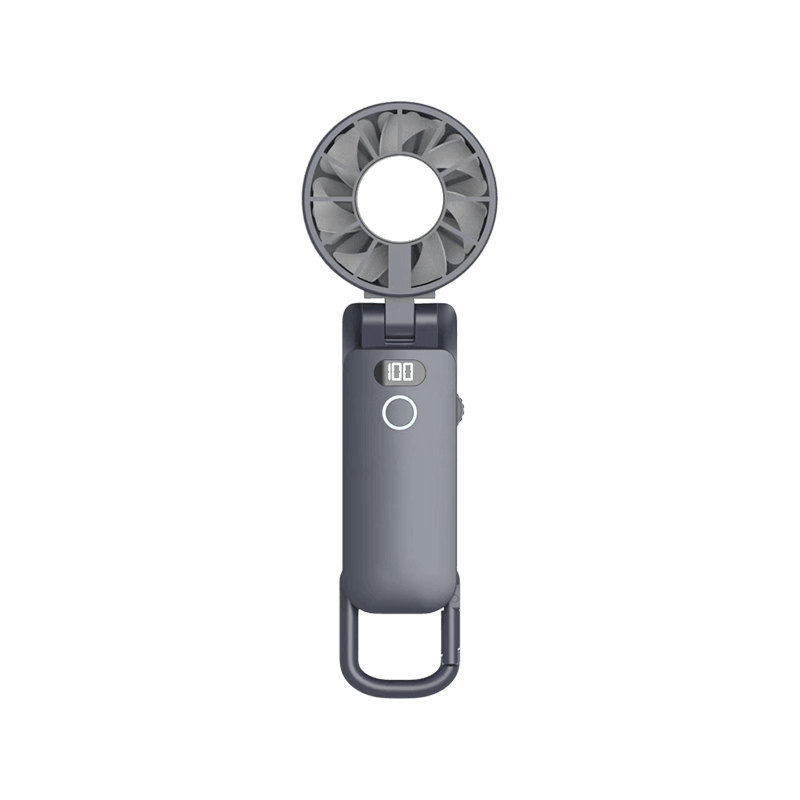
Portable cooling fans include traditional pedestal or clip on models with motor driven propeller blades, personal neck fans designed for body worn operation around the neck, handheld portable cooling fans providing directional air flow, and desk or tent mounted models offering stationary coverage for camping or travel accommodations. Each portable cooling fan type addresses specific mobility and usage requirements.
Common portable cooling fan configurations include:
Portable cooling fans utilize multiple power sources including rechargeable lithium ion batteries providing 6 to 12 hours of continuous operation, USB charging ports enabling laptop or power bank operation, standard alkaline batteries for backup reliability, and solar charging capabilities for camping applications eliminating battery concerns. Battery specifications significantly impact portable cooling fan utility in remote environments.
Portable cooling fan power specifications include:
Portable cooling fans and portable air coolers represent fundamentally different cooling approaches: portable cooling fans move air creating perceived cooling through wind chill effects without temperature reduction, while portable air coolers reduce actual ambient temperature by 3 to 10 degrees Celsius through evaporative or refrigerant based cooling at significantly higher power consumption and cost. Understanding these distinctions enables appropriate selection for specific applications and environmental conditions.
Portable cooling fans provide air circulation cooling creating wind sensations improving perceived comfort without reducing actual environmental temperature, operating at 25 to 40 watts power consumption with battery runtimes of 8 to 24 hours on rechargeable units, and costs ranging from 15 to 60 dollars depending on size and features. Portable cooling fans excel in humid environments where evaporative cooling proves ineffective.
Portable cooling fan characteristics include:
Portable air coolers reduce actual temperature by 3 to 10 degrees Celsius through evaporative cooling using water evaporation or refrigerant based cooling systems, consuming 40 to 100 watts limiting battery runtime to 4 to 8 hours on portable power supplies, and costing 100 to 400 dollars representing significantly higher investment than portable cooling fans. Portable air coolers require water supply limiting mobile applications.
Portable air cooler characteristics include:
| Feature | Portable Cooling Fan | Portable Air Cooler | Misting Portable Cooling Fan |
|---|---|---|---|
| Temperature Reduction | 0 degrees Celsius | 5 to 10 degrees Celsius | 2 to 4 degrees Celsius |
| Power Consumption | 25 to 40 watts | 60 to 100 watts | 15 to 30 watts |
| Battery Runtime | 8 to 24 hours | 4 to 8 hours | 6 to 16 hours |
| Weight | 200 to 800 grams | 3 to 8 kilograms | 400 to 1200 grams |
| Cost | 15 to 60 dollars | 150 to 400 dollars | 30 to 100 dollars |
| Water Requirements | None | Every 4 to 8 hours | Every 6 to 12 hours |
| Humidity Effectiveness | Excellent all conditions | Poor above 50 percent | Good all conditions |
Portable cooling fans for camping represent essential gear in warm climates providing personal air circulation within tents or at campsites, with battery powered models eliminating power supply concerns and weights under 500 grams enabling easy transport with camping equipment. Selecting appropriate portable cooling fans for camping requires evaluating tent size, ambient temperatures, power availability, and personal cooling preferences.
Camping portable cooling fans should feature rechargeable batteries with 8 to 12 hour runtimes enabling operation throughout nighttime camping hours, compact sizes of 15 to 25 centimeters fitting within tent spaces, and mounting options including clip on designs enabling tent pole attachment or handheld operation for directional cooling. These specifications ensure effective camping comfort in warm environments.
Portable cooling fan features for camping include:
Camping location characteristics significantly impact portable cooling fan effectiveness and selection decisions, with desert camping requiring misting portable cooling fans for enhanced cooling, humid tropical camping benefiting from traditional air circulation portable cooling fans, high altitude camping requiring minimal cooling due to lower temperatures, and coastal camping presenting salt air corrosion concerns favoring corrosion resistant designs.
Portable cooling fan selection by camping environment:
Portable cooling fans for travel provide personal air circulation in hotel rooms, aircraft cabins, and temporary accommodations without requiring installation or adjustment of facility climate control systems, with compact sizes of 10 to 15 centimeters and weights under 400 grams fitting easily within luggage without weight concerns. Travel portable cooling fans address air circulation limitations in temporary accommodations.
Travel portable cooling fans should include USB rechargeable designs eliminating special charger requirements, compact foldable designs reducing luggage space, quiet operation of 30 to 40 decibels avoiding disturbance in shared accommodations, and universal outlet compatibility working with international electrical systems. These features optimize portable cooling fans for travel applications.
Portable cooling fan features for travel include:
Travel situations present varying cooling requirements with hotel rooms benefiting from standing portable cooling fans providing ambient cooling, aircraft cabins requiring handheld personal portable cooling fans for individual air circulation, and car travel during stops benefiting from clip on portable cooling fans temporary cooling during rest periods. Scenario appropriate portable cooling fan selection enhances travel comfort.
Portable cooling fan selection by travel scenario:
Portable cooling fans for cars provide supplemental air circulation in vehicles during hot weather or when air conditioning proves inadequate, with 12 volt direct current power from automotive electrical systems eliminating battery concerns and enabling continuous operation during vehicular use. Car portable cooling fans address thermal comfort during parking and travel situations.
Car portable cooling fans operate from 12 volt direct current automotive power systems through cigarette lighter connections, USB charger ports, or direct battery terminal connections, providing consistent power throughout vehicle use without battery depletion concerns unlike portable cooling fans with internal batteries. Automotive power sources eliminate portable cooling fan battery limitations in vehicles.
Portable cooling fan automotive power options include:
Car portable cooling fans attach to windshield mounts, dashboard clamps, seat headrest clips, or roof mounting systems positioning fans for optimal air circulation throughout vehicle cabins, with suction cup attachments remaining removable and reusable without permanent modification. Strategic positioning maximizes car portable cooling fan effectiveness.
Portable cooling fan installation options for vehicles:
Car portable cooling fans should feature 12 volt power requirements of 8 to 20 amperes remaining within safe automotive electrical limits, noise levels below 60 decibels enabling conversation and audio entertainment during operation, and sizes of 12 to 25 centimeters fitting vehicle interiors without obstructing driver visibility or occupant comfort. These specifications ensure safe and effective car portable cooling fan operation.
Portable cooling fan specifications for automotive applications include:
Proper maintenance extends portable cooling fan lifespan and ensures consistent performance across camping, travel, and automotive applications. Understanding care requirements enables long term portable cooling fan utility.
Portable cooling fans accumulate dust and debris in blade and motor areas reducing air flow efficiency and motor performance, requiring monthly cleaning with soft brushes or cloths removing surface debris and quarterly deeper cleaning with compressed air or water immersion for heavily soiled units. Regular cleaning maintains portable cooling fan performance.
Portable cooling fan cleaning procedures include:
Portable cooling fan battery longevity requires avoiding complete discharge cycles maintaining battery health for 500 to 1000 charge cycles, storing portable cooling fans in cool environments preventing heat damage, and replacing batteries every 2 to 3 years restoring performance as degradation occurs beyond 80 percent capacity. Proper battery management maximizes portable cooling fan utility.
Portable cooling fan battery care guidelines:
Portable cooling fan investment decisions require evaluating cost relative to functionality and expected utility across specific applications. Understanding value propositions enables informed purchasing decisions.
Portable cooling fans range from 15 to 60 dollars with budget models around 15 to 25 dollars providing basic air circulation for casual use, mid range portable cooling fans at 25 to 40 dollars offering enhanced features including multiple speed settings and improved battery capacity, and premium portable cooling fans at 40 to 60 dollars providing extended features such as solar charging and advanced durability. Price variation reflects feature and quality differences.
Portable cooling fan pricing by category:
Portable cooling fans justify investment through comfort improvements in camping, travel, and car situations where alternative cooling proves unavailable, with expected lifespan of 3 to 5 years amortizing initial cost to 5 to 15 dollars annually making portable cooling fans highly cost effective personal cooling solutions.
Portable cooling fan value assessment includes:
Portable cooling fans do not reduce actual ambient temperature but create perceived cooling through air circulation and wind chill effects of 2 to 5 degrees. Portable air coolers using evaporative technology reduce actual temperature by 5 to 10 degrees Celsius but require water supply and consume significantly more power at 60 to 100 watts. Misting portable cooling fans provide compromise combining portable cooling fan portability with 2 to 4 degree actual temperature reduction through water evaporation. Selection depends on whether perceived cooling suffices for your situation or actual temperature reduction proves essential.
Battery runtime for portable cooling fans typically ranges from 6 to 24 hours depending on battery capacity and speed settings. Budget portable cooling fans with 1000 milliampere hour batteries provide 6 to 8 hours runtime, mid range portable cooling fans with 2000 to 3000 milliampere hour batteries offer 10 to 16 hours operation, and high capacity portable cooling fans with 4000 milliampere hour batteries enable 16 to 24 hour continuous operation. Reducing fan speed extends runtime by 20 to 30 percent. Battery degradation after 500 charge cycles reduces runtime by 10 to 20 percent requiring replacement for optimal performance.
Portable cooling fans provide excellent supplemental cooling in parked vehicles through air circulation, with handheld portable cooling fans directed toward occupants providing immediate relief and standing portable cooling fans enabling interior circulation reducing stagnant air. However, portable cooling fans do not reduce vehicle temperature without air conditioning, making them useful for comfort improvement rather than complete cooling solutions. Solar powered portable cooling fans automatically activate when exposed to direct sunlight providing perpetual cooling without battery concerns. For significant temperature reduction, portable air coolers or vehicle air conditioning remain necessary, but portable cooling fans enhance comfort during brief parking periods.
Handheld portable cooling fans from 10 to 15 centimeters work best for aircraft travel providing personal directional cooling without airport security concerns or aircraft regulation violations. USB rechargeable models enable charging at airport USB stations before boarding. Neck portable cooling fans work effectively for extended flights distributing cooling around neck and shoulders. Portable cooling fans with noise levels below 35 decibels prevent disruption to fellow passengers and flight crew. Budget portable cooling fans at 15 to 25 dollars provide adequate functionality without significant carry on luggage weight. Avoid large portable cooling fans exceeding 25 centimeters as they violate carry on size restrictions and prove inconvenient in aircraft cabin environments.
Portable cooling fans perform equally well in all humidity conditions including high humidity environments making them universally applicable cooling solutions. Portable air coolers using evaporative cooling become progressively less effective as humidity increases, with effectiveness dropping 30 to 40 percent above 50 percent humidity and providing minimal temperature reduction above 70 percent humidity. Misting portable cooling fans maintain reasonable performance in moderate humidity but lose effectiveness in high humidity similar to evaporative coolers. For tropical camping or humid travel situations, portable cooling fans provide superior performance compared to evaporative portable air coolers making them the preferred choice for humid climate cooling.
Monthly dust removal with soft brushes cleaning blade and motor areas prevents air flow restriction and maintains cooling performance. Quarterly deeper cleaning with compressed air or water immersion removes accumulated debris from motor vents and housing. Annual battery health assessment through charge cycle observation helps identify degrading batteries requiring replacement. Storage in cool dry locations prevents heat damage and humidity corrosion extending equipment lifespan. Avoiding complete discharge cycles maintains battery health for 500 to 1000 charge cycles before degradation occurs. Following manufacturer maintenance recommendations including bearing lubrication and seal inspection extends portable cooling fan lifespan from typical 3 to 5 years to 5 to 7 years with diligent care.
Portable cooling fans present minimal safety risks for camping when operated with reasonable precautions. Secure mounting prevents accidental falls during sleep causing injury or equipment damage. Battery charging inside tents risks electrical fire so charging should occur outside or in well ventilated areas. Avoid placing portable cooling fans directly above occupied sleeping areas preventing accidental impacts. Keep portable cooling fans away from fabric edges preventing entanglement and material damage. Handheld portable cooling fans held during operation require attention preventing accidental drops on persons. With proper operation practices, portable cooling fans present minimal camping risks while providing valuable cooling benefits.
Smart energy-efficient portable cooling hand fans have quickly become one of the most practical personal comfort devices available, combining compact design, long battery life, an...
READ MORECleaning has traditionally been one of the most time consuming and physically demanding tasks in both household and commercial settings. Whether it involves scrubbing floors, vacu...
READ MOREThe deodorant stick container is one of the most overlooked single-use plastic items in a daily personal care routine. As brands and consumers reckon with the full environmental...
READ MOREChoosing the Right Handheld Cooling Fan: Quick Answer The best handheld cooling fan for most people is a rechargeable, dual-blade or bladeless model with at least 3 speed settings...
READ MOREIn office environments where air conditioning runs year-round, or during winter months with inadequate central heating, workers seated for extended periods regularly experience ...
READ MOREThe heated eye mask is good for your eyes in most cases — particularly for people suffering from dry eye disease, meibomian gland dysfunction (MGD), eye fatigue, or poor sleep. Wh...
READ MORE